
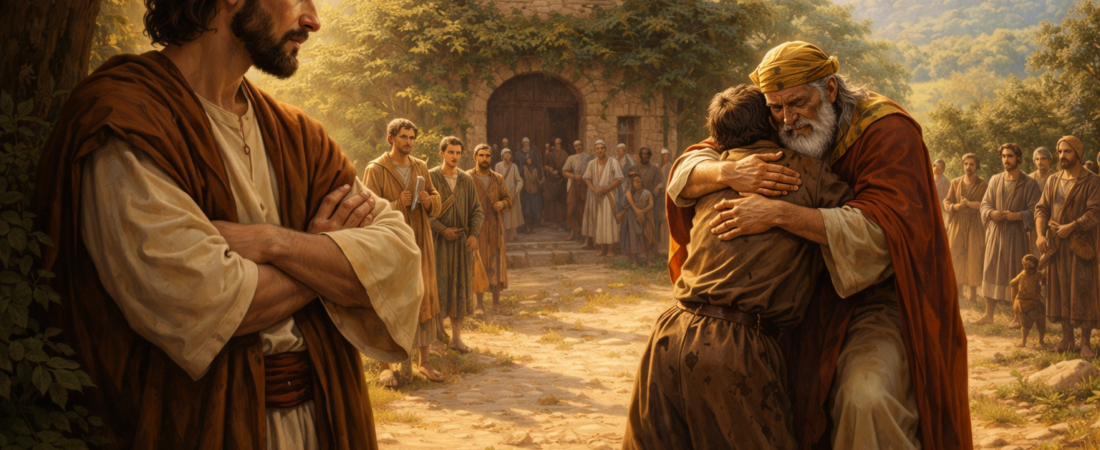
“And the son said to him, ‘Father, I have sinned against heaven and before you. I am no longer worthy to be called your son. But the father said to his servants, ‘Bring quickly the best robe, and put it on him, and put a ring on his hand, and shoes on his feet. And bring the fattened calf and kill it, and let us eat and celebrate. For this my son was dead, and is alive again; he was lost, and is found.’ And they began to celebrate.” – Luke 15:11-32
Today, we are going to explore one of the parables of our Lord Jesus Christ. A parable is a simple story used to illustrate a moral, philosophical, or spiritual lesson. Jesus often spoke in parables during His time on earth, and one of the most frequently referenced—and one that vividly portrays God’s love and the gospel—is the parable of the Prodigal Son.
This parable begins with a man who has two sons. The younger son approaches his father, demanding his inheritance early. Shortly after receiving it, he leaves for a far-off country, where he squanders all his wealth on reckless living. Then, a famine strikes the land, and the young man, now penniless, finds himself in dire need. In desperation, he takes the only job he can find—feeding pigs in a barn. Even in this degrading position, he is starving and envies the pigs, for no one gives him anything to eat.
It is in this state of misery that he comes to his senses. He remembers the abundance in his father’s house, where even the servants have food to spare. Realizing his unworthiness, he devises a plan: he will return to his father and humbly ask to be taken in as a servant, no longer expecting to be treated as a son.
As the young man approaches home, something remarkable happens. His father sees him from afar, feels compassion, and runs to meet him.
The son begins his confession:
“Father, I have sinned against heaven and before you. I am no longer worthy to be called your son.”
But the father interrupts, telling his servants:
“Bring quickly the best robe and put it on him, and put a ring on his hand and shoes on his feet. Bring the fattened calf and kill it, and let us eat and celebrate. For this my son was dead, and is alive again; he was lost, and is found.”
And they began to celebrate.
This parable offers countless lessons, but today, we will focus on three key takeaways:
The Sin of the Younger Brother
The younger brother’s sin is evident in his selfishness and rebellion. He demands his inheritance—essentially wishing his father were dead—and squanders it in reckless living far from home. This mirrors the human condition. When we are in sin, whether believers or unbelievers, we tend to distance ourselves from God. We stop praying, neglect fellowship, avoid Scripture, and selfishly squander God’s blessings. This separation from the Father is a vivid picture of life without Him—lost and spiritually destitute.
The Humbling of the Younger Brother
After losing everything, the younger brother is forced into degrading labor. His brokenness is a reflection of the consequences of sin—it leads to emptiness and despair. However, true humility doesn’t come simply from being broken by circumstances; it requires a change of heart. Many people experience hardship but fail to turn to God, falling back into the same patterns of sin. True humility is recognizing that we are not sufficient in ourselves and acknowledging our need for God’s salvation, direction, and grace.
The Love and Compassion of the Father
Despite his son’s rebellion and selfishness, the father’s response is extraordinary. Instead of meeting him with condemnation, the father runs to him with open arms. He doesn’t demand repayment or retribution but restores him fully as a son. He celebrates his return, saying, “This my son was dead, and is alive again; he was lost, and is found.”
This is a picture of God’s grace toward us. Even when we rebel and fall into sin, God meets us with forgiveness and love when we humble ourselves and return to Him. He doesn’t just take us back as servants—He restores us as His children and rejoices over our repentance.
Conclusion
The parable of the Prodigal Son is a beautiful illustration of what God does in the heart of every believer. The angels rejoice when we repent and turn to Him. God doesn’t come to us in condemnation but in forgiveness, offering us the hope of being heirs with Christ, who died for our sins.
So, let us learn from the younger son’s sin, his humility, and the father’s gracious love. In seasons of brokenness, remember that God is ready to comfort and restore you. All you need to do is humble yourself and return to Him.
Questions
Who does the younger son represent? What makes the younger son want to return home?
How do you think the father felt when his son left? How does the father treat the son on his return?
What kind of person needs to hear this story the most?
What lessons did you learn from the story that you can apply to your own life?